
E-Commerce Storefront
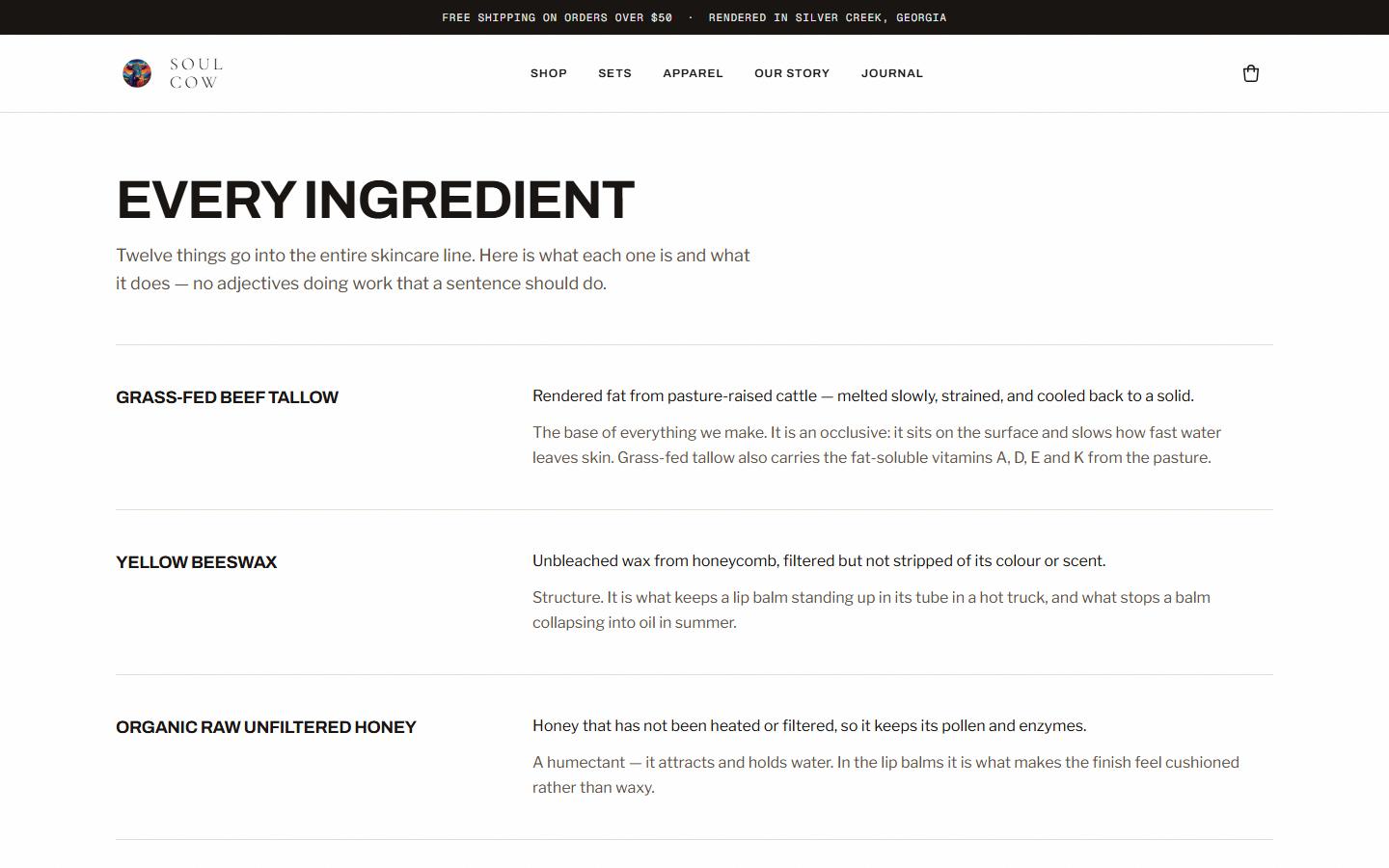
Four ingredients, and a store that says so.
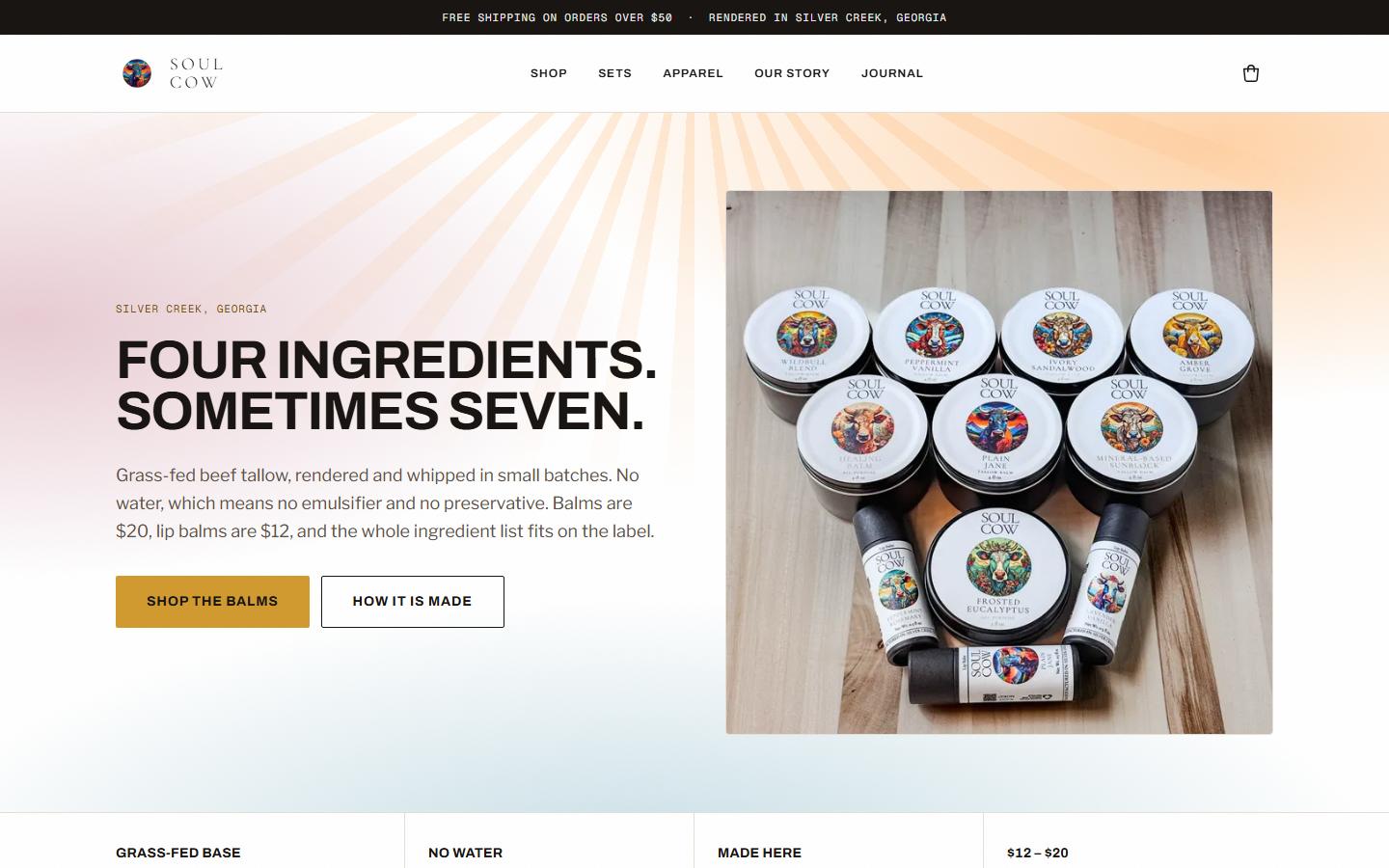
Soul Cow renders grass-fed tallow into small-batch skincare in Silver Creek, GA. We rebuilt the storefront off the template store it had outgrown. Every product fact transcribed, none invented.
The challenge
A template store presents a flat catalog and calls it a shop. A visitor who has never heard of tallow lands on a grid of identical tins with no path from "what is this" to "in the cart": no collections, no bundles, no editorial to explain why a four-ingredient balm costs what it costs, and no email capture to keep anyone who wasn't ready. The product was doing all the work and the storefront was doing none of it.
What we built
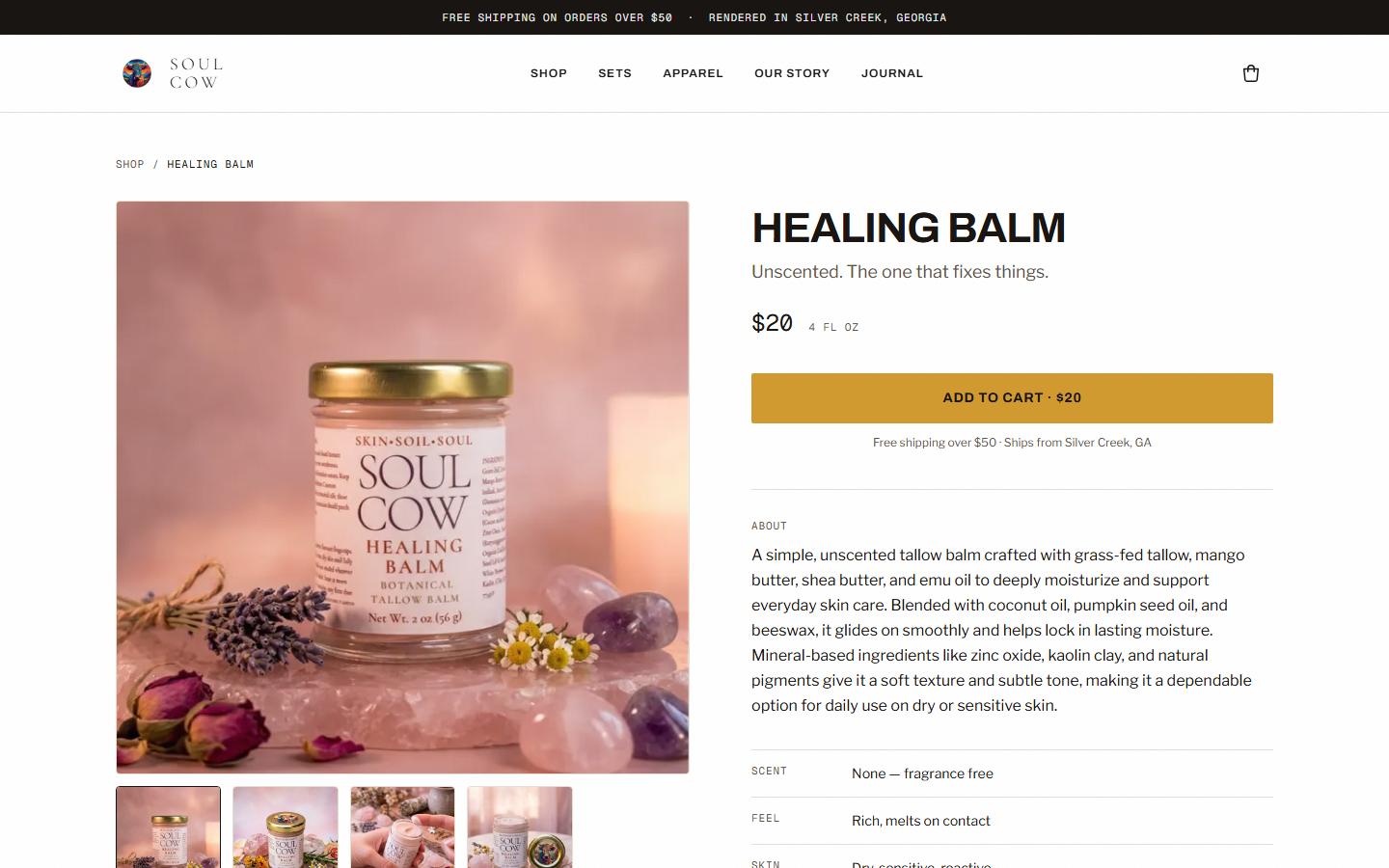
- A storefront that merchandises the ingredient story: the four-ingredient argument leads, and every product page carries the full deck rather than hiding it behind a tab
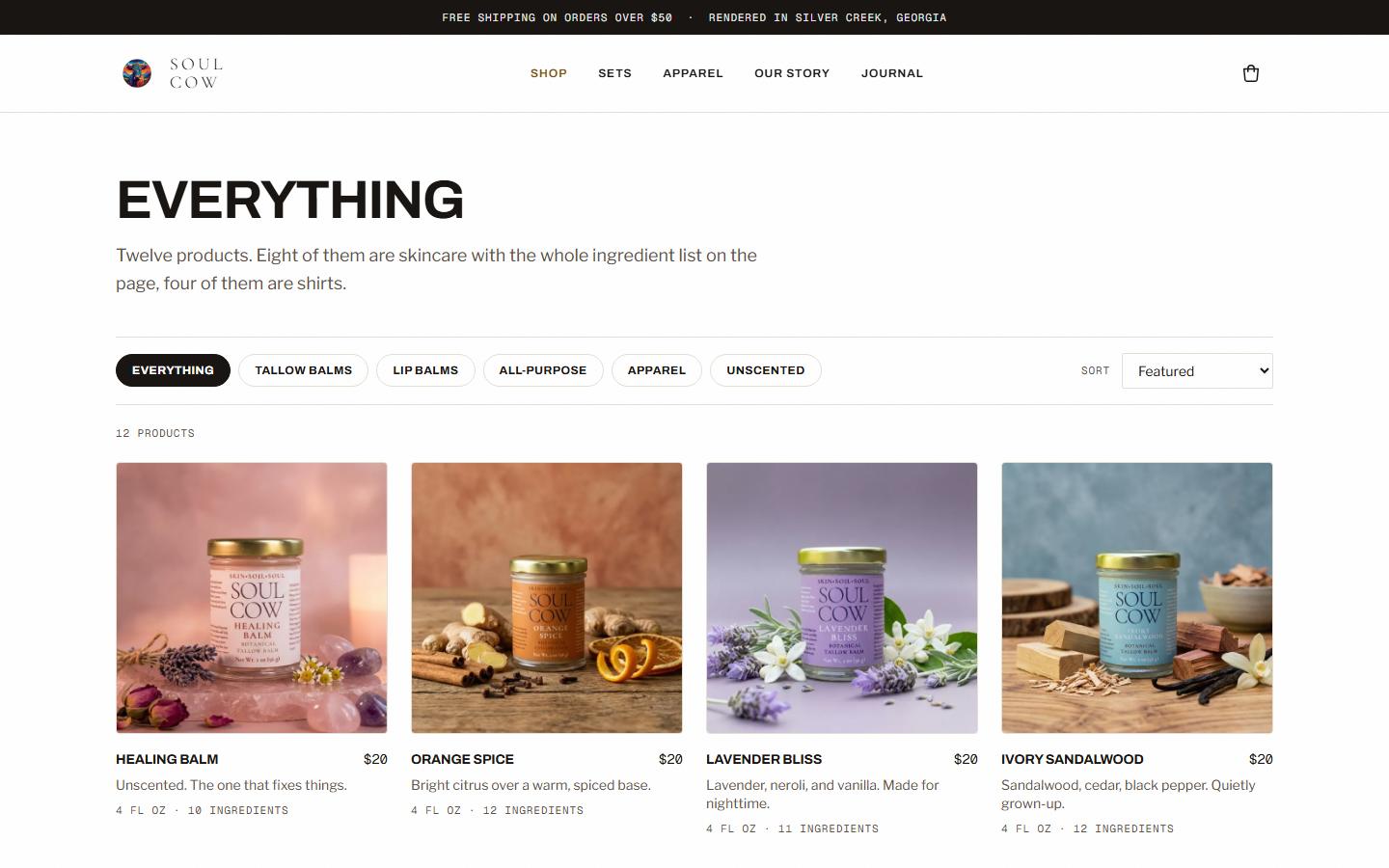
- Collections that give a first-time visitor a route in: by what it's for, not by SKU
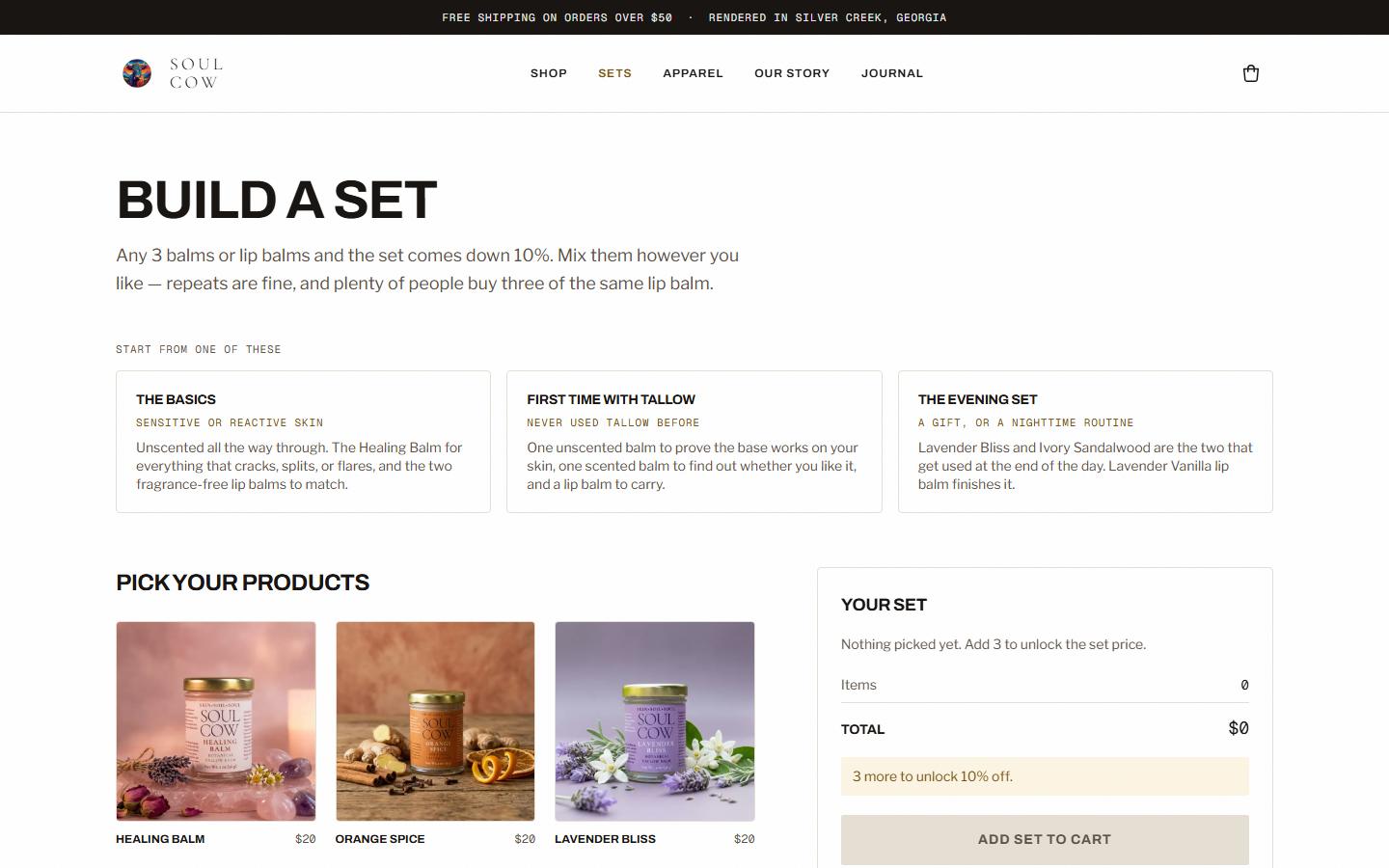
- A set builder: curated bundles plus build-your-own, so the second product is a decision the store helps with instead of one the customer has to make alone
- An editorial journal, authored from scratch, because the old blog was empty
- The merchandising that actually converts: a free-shipping threshold, badges, review surfaces and email capture, all wired to real catalog data
- Checkout that doesn't wait on a platform: it runs on the Shopify Storefront API when one is configured and captures orders first-party until then, switching over on configuration alone with no rebuild
- A build that maintains itself: 44 MB of original media compressed to 15 MB of webp and a sitemap generated from the real routes, both at build time, so a clean checkout ships correctly
What isn't on it
Every price, ingredient deck, product description and contact detail was transcribed off the existing store or off photographs of the real packaging. Where a fact was missing, the site says nothing rather than filling the gap: no named stockists until there are stockists, no certifications claimed, nothing implied about third-party testing. A skincare brand's whole asset is being believed, and the fastest way to lose that is a confident sentence nobody can back up.
The result
A storefront that can carry the brand instead of hosting it: a clear path from the ingredient story to the cart, a second purchase built into the design, and the marketing surfaces the old store never had. It's the same custom website work we bring to any business that has outgrown a template, with the systems behind it built to grow into.
A look at the storefront
What we'd build for you.
Let's build something better.
Tell us what's slowing the business down. We'll tell you what we'd build to fix it.